
Late summer in Lancaster exposes every lawn’s weak points.
If your grass thinned out in the July heat, stayed brown longer than the neighbors’, or just looks worn despite regular mowing and lawn care, soil compaction is likely part of the problem.
Lawn aeration in Lancaster, Ohio is one of the most effective services you can schedule right now — and the timing matters more than most homeowners realize.
Aeration is not complicated, but it is specific. Done at the right time and in the right conditions, it changes how your soil handles water, air, and nutrients for the rest of the year.
Done too late or skipped entirely, compaction keeps building and the lawn keeps declining no matter how much you water or fertilize.
Here is what aeration does, when to schedule it in Fairfield County, and what separates a good job from a wasted one.

What Lawn Aeration Does for Your Soil
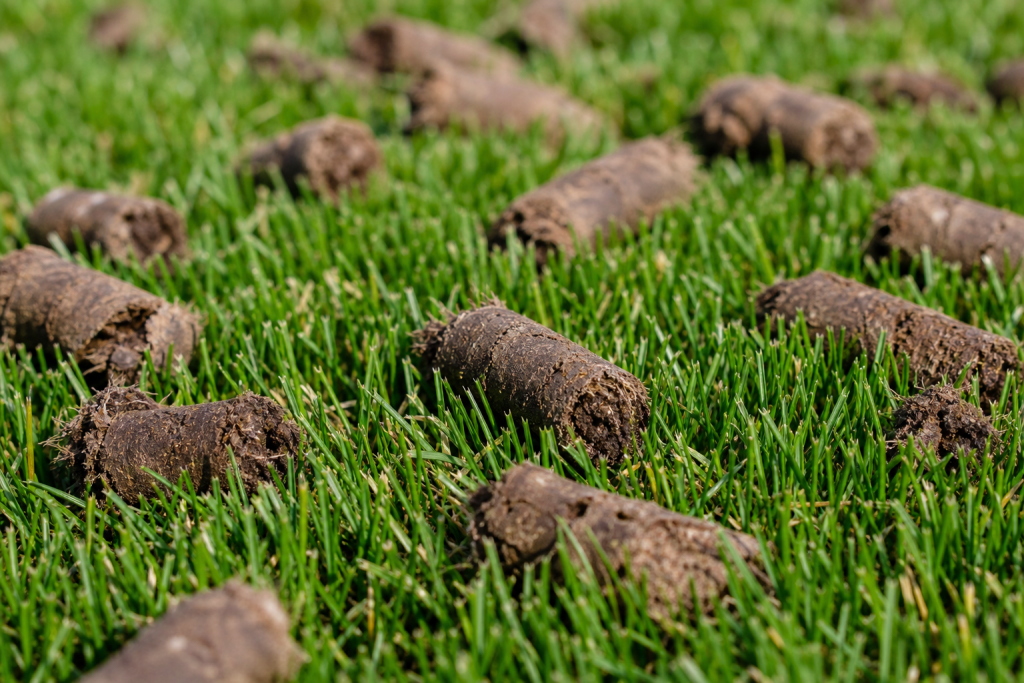
Aeration is the process of pulling small cores of soil — typically two to three inches deep — out of your lawn.
Those cores are left on the surface to break down naturally.
The holes left behind serve three purposes.
Relieves Soil Compaction
Foot traffic, lawn mowing patterns, and Ohio’s clay-heavy soils press particles tighter together over time.
Compacted soil blocks root growth and limits how deep water can penetrate.
The cores open up space for roots to expand.
Improves Water and Nutrient Absorption
On a compacted lawn, rain and irrigation run across the surface instead of soaking in.
After aeration, water reaches the root zone instead of pooling or running off into the driveway.
This is also why lawn fertilization works better after aeration — the product reaches the roots instead of sitting on top of a sealed surface.
Reduces Thatch Buildup
Thatch is the layer of dead grass, roots, and organic material between the soil surface and the green blades.
A thin thatch layer is normal, but when it builds past half an inch, it blocks water and air.
Aeration breaks through thatch mechanically and accelerates its decomposition.
Core Aeration vs. Spike Aeration
One important distinction: core aeration is not the same as spike aeration.
Spike aerators poke holes without removing soil, which can actually increase compaction around each hole.
Core, or plug, aerators pull material out, creating real space in the soil profile.
Why Fall Is the Best Time to Aerate in Lancaster, Ohio
Central Ohio sits in USDA Zone 6a.
The lawns here are almost entirely cool-season grasses:
- Kentucky bluegrass
- Turf-type tall fescue
- Perennial ryegrass
These grasses have two active growth periods: spring and fall.
Summer heat pushes them into partial dormancy.
Fall aeration works better than spring for several connected reasons.
Cool-Season Grass Is Growing Aggressively
Cool-season grass enters one of its strongest growth phases in September and October.
The lawn recovers from the core holes quickly, and roots grow aggressively into the newly opened soil.
Spring aeration works too, but the recovery window is shorter before summer stress arrives.
Fall Aeration Pairs With Overseeding
Overseeding pairs naturally with fall aeration.
Seeds that land in core holes have direct soil contact, so germination rates are higher than broadcasting over a compacted surface.
If you are planning to thicken thin areas, this is the window.
Weed Competition Drops
Annual weeds like crabgrass are finishing their lifecycle by September.
New grass seedlings face less competition than they would in spring, when crabgrass and broadleaf weeds are germinating at the same time.
That makes fall the stronger window for weed control through turf density rather than herbicides alone.
Soil Moisture Improves
Late summer and early fall in Fairfield County tend to bring more consistent rainfall after the dry stretches of July and August.
That keeps aerated soil moist enough for recovery and seed establishment without constant irrigation.
The Best Aeration Window
The practical window for lawn aeration in Lancaster, Ohio is mid-August through mid-October.
Earlier is better if you are combining aeration with overseeding because new grass needs several weeks of growth before the first hard freeze.
Signs Your Lawn Needs Aeration
Not every lawn needs aeration every year, and not every thin spot is a compaction problem.
But certain signs point strongly toward it:
Water Pools or Runs Off
If the surface stays wet after rain but the soil an inch down is dry, compaction may be keeping water from penetrating.
Thin, Sparse Growth Despite Fertilizing
Fertilizer cannot reach roots effectively through compacted soil.
If your lawn responds poorly to applications, the soil may be the bottleneck.
Heavy Foot Traffic Areas Look Worn
Paths between the driveway and front door, around play sets, or along fence lines where pets run compact faster than other areas.
Hard, Dense Soil
If you cannot push a screwdriver three to four inches into the ground without significant effort, the soil is compacted.
New Construction
Builder-grade topsoil is often thin, and subsoil beneath it gets heavily compacted by equipment.
Lawns in newer developments around Lancaster commonly need aeration within the first year or two.
It Has Been More Than Two Years
Most residential lawns in Fairfield County benefit from aerating once a year in the fall or every other year.
If two or more of those describe your yard, scheduling lawn aeration — Lancaster, Ohio’s clay soils make it especially impactful — should be near the top of your fall to-do list.
What the Aeration Process Looks Like
Professional core aeration is straightforward, but the details affect the result.
Preparing the Lawn
The lawn should be mowed at its normal height beforehand.
Soil needs to be moist — not soaking wet and not bone dry.
Watering the day before, or scheduling after a rain, gives the aerator the right conditions to pull clean, full-depth cores.
Core Aeration Equipment
Commercial-grade core aerators are heavy machines with hollow tines that punch into the soil and pull plugs as they rotate.
They cover the lawn in overlapping passes, pulling cores every few inches.
A professional-grade machine pulls deeper, more consistent cores than a rental unit, which matters on the clay soils common in this part of Ohio.
What Happens to the Soil Plugs?
The cores left on the surface look messy for a few days.
They break down within one to two weeks, redistributing soil and organic matter into the lawn.
Do not rake them up — that defeats part of the purpose.
Aeration, Overseeding, and Fertilization
Aeration alone helps, but combining it with overseeding and a fall fertilizer application delivers the real improvement.
The aeration opens up the soil, the seed fills in thin spots, and the fertilizer feeds root development heading into winter.
That combination is what turns a tired lawn into a thick, competitive stand of grass by next spring.
Once fall leaf removal begins in October, a recently aerated lawn handles the transition into winter in much stronger condition.
DIY Aeration vs. Professional Lawn Care
Homeowners can rent a core aerator from an equipment shop, and for a small, flat yard with easy access, that can work.
But there are realities worth considering before going that route.
Equipment Is Heavy
Core aerators are heavy and difficult to maneuver, especially around landscaping beds, trees, and slopes.
Rental units are generally less powerful than professional equipment, which means shallower cores and less effective relief on heavy clay soils.
Professional Aeration Is Faster
A professional crew aerates a typical residential lawn in under an hour, including setup and cleanup.
A homeowner doing it for the first time with a rental machine should expect it to take significantly longer, plus the time to pick up and return the equipment.
The Real Value Goes Beyond the Machine
Professional service includes knowing:
- The right overseeding rate for your grass type
- The right lawn fertilization blend for fall root growth
- The best timing for seed establishment
- How to work around slopes, beds, and compacted areas
For a straightforward yard, DIY aeration gets the job done.
For lawns with significant compaction, slopes, heavy clay, or areas that need overseeding, professional lawn care and landscaping in Lancaster typically delivers a better outcome with less risk of wasted seed.
Getting Your Lawn Ready for Fall in Fairfield County
If your lawn came through this summer thin, stressed, or uneven, the fix is not more watering or more frequent mowing.
It is getting air, water, and nutrients back into the root zone — and the window to do that effectively is open right now.
Aeration is one of the highest-return services in lawn care because it addresses the underlying problem rather than masking symptoms.
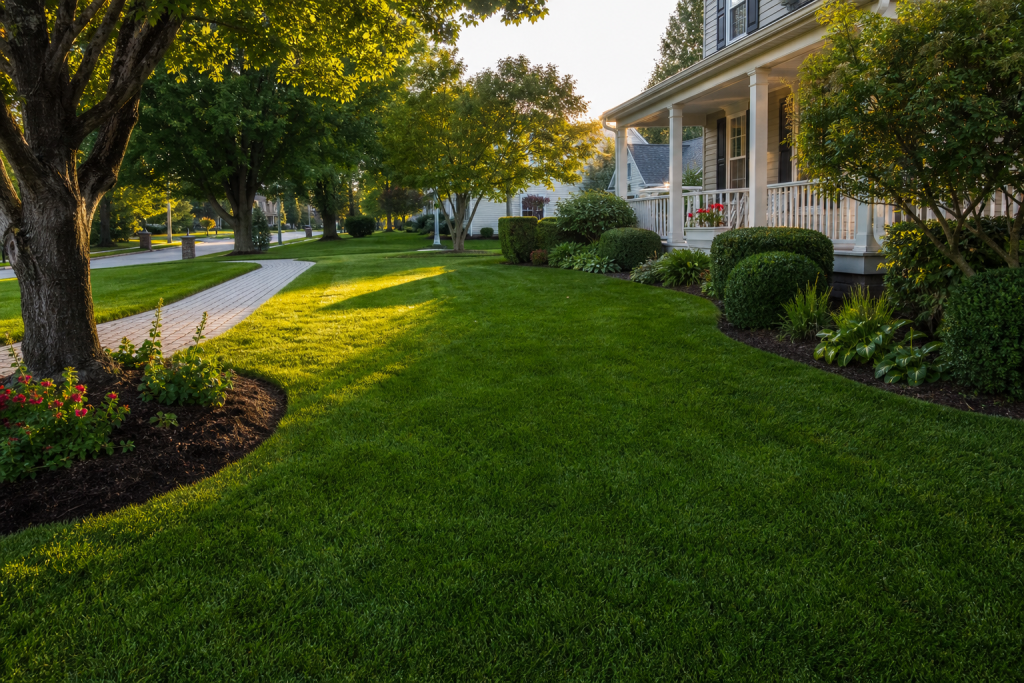
A lawn that gets aerated, overseeded, and fed this fall comes back in spring thicker, greener, and better equipped to handle next summer’s heat.
The same applies to commercial properties — office parks, retail centers, and apartment communities across Fairfield County benefit from fall aeration on the same schedule.
Schedule Fall Lawn Aeration
Contact All Season Lawn Pro for a lawn assessment and a fall aeration plan built around your property — thicker turf, better curb appeal, and a healthier lawn heading into next year.
Locally owned and operated in Lancaster, Ohio, with the equipment and experience to do it right the first time.
3 Responses