
Fall Leaf Cleanup, Lancaster, Ohio: What Leaves Do to Your Lawn Over Winter
Fall leaf cleanup for homeowners in Lancaster, Ohio starts earlier than you think. The first leaves are already down. What you do over the next eight weeks decides how your grass looks in April.
Leaves that are left sitting on turf can block sunlight, hold moisture against the crown, and set up fungal problems you will not see until the snow melts. If you seeded or fertilized this month, a leaf layer also stops all of that work from reaching the soil.
Here is how we handle it, when we schedule each pass, and what you can do yourself.
What Happens When Leaves Sit Too Long on Your Lawn
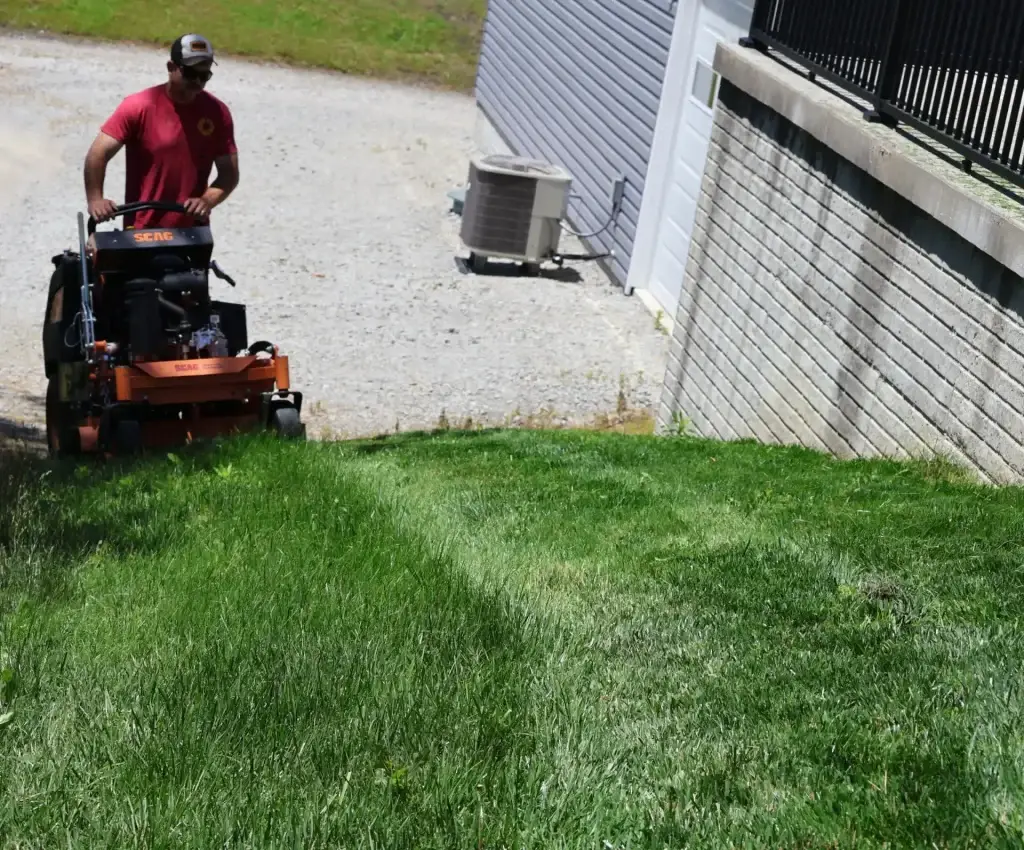
A scattering of leaves does no harm. A thick, wet mat does.
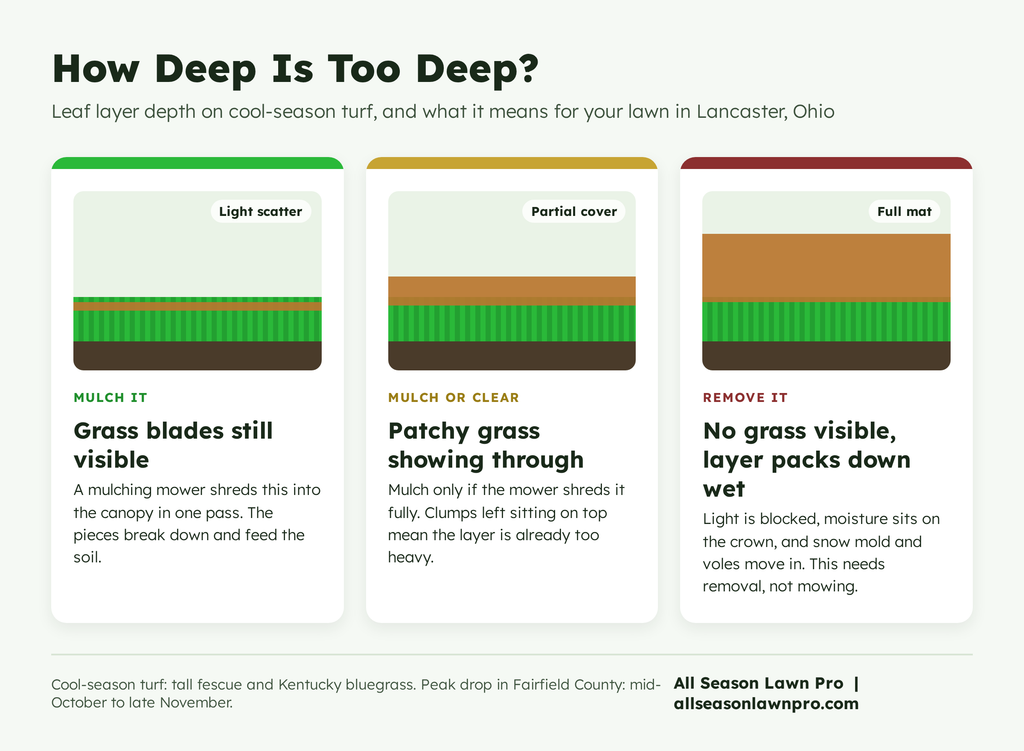
Piled leaves flatten into a dense layer that blocks light from the turf underneath. Grass stops photosynthesizing and thins out. In Lancaster, most lawns are cool-season grasses like tall fescue and Kentucky bluegrass, and those grasses are still actively growing through October. Shading them during their best growing weeks of the year costs you density you cannot get back until spring.
That same leaf mat traps moisture at the soil surface. Wet organic material sitting on grass through late fall and winter is how snow mold gets started. You find it in March as circular patches of matted, dead grass, and by then the fix is repair work rather than prevention.
Leaves also give pests a place to live. Voles, mice, and insects shelter in leaf litter all winter. Vole runways under a heavy leaf mat can chew through large sections of a lawn before you ever pull the leaves back.
When to Schedule Fall Leaf Cleanup in Fairfield County
Timing is the part homeowners often get wrong. Heavy leaf drop in Fairfield County runs from mid-October into late November, and waiting for the last leaf to fall before doing anything leaves your grass buried for a month.
We schedule cleanups in passes instead of one late visit. Two or three passes between early October and mid-November keep the layer from building up. This schedule will also keep light on the lawn during the weeks when cool-season grass is putting down roots.
If we aerated and overseeded your lawn this month, leaf removal matters even more. New seedlings need steady light and air movement to establish, and leaves landing on fresh seed can smother it before it roots.
Lancaster sits in USDA Zone 6a. The average first frost lands in mid to late October, and hard freezes usually arrive in November. That puts the practical cleanup window at about eight weeks from today.
Mulching or Removing: Which One Your Lawn Needs
Mulching the leaves with your mower does work, within limits.
When the layer is light, a mulching mower chops leaves into pieces small enough to break down and feed the soil. Michigan State University Extension has studied this for years and reports large reductions in dandelion and crabgrass where leaves get mulched in each fall. The shredded material covers the bare soil where weed seeds germinate (MSU Extension).
Heavy volume is a different story. If your mower leaves clumps of chopped leaves sitting on the surface instead of shredding them into the canopy, there is too much material. Those clumps act like whole leaves: they mat, they block light, and they hold water.
Most properties we service need both services. Mulch the light early drop with a mower, then haul off the heavy October volume. Big maples, oaks, and sweetgums usually require at least one or two full removal passes no matter how good your mower is.
What Our Fall Cleanup Service Covers
A cleanup is more than raking a lawn. Here is what we do on a residential property in Lancaster and the surrounding Fairfield County communities.
Lawn clearing. We pull leaves off all turf areas with commercial equipment, so the grass gets light and air before it goes dormant.
Bed cleanup. We clear leaves out of landscape beds, around shrubs, and along foundation plantings. A thin layer in beds insulates plants and can stay. Thick piles come out, because they hold disease and give pests cover.
Hardscape and gutter line clearing. Walkways, driveways, patios, and gutter lines get blown clear. Wet leaves on concrete and pavers are slick once temperatures drop, and they clog drainage fast.
Yard waste handling. Depending on your property, we haul leaves away or stage them at the curb. The city of Lancaster collects yard waste, leaves included, on your scheduled pick-up day, the same day as your trash pick-up. Bags, bundles, and marked containers all have rules, so check the city yard waste guidelines before you set anything out.
Final pass. After the last significant drop, we come back so your lawn goes into winter clean and cared for.
How Cleanup Fits the Rest of Your Fall Program
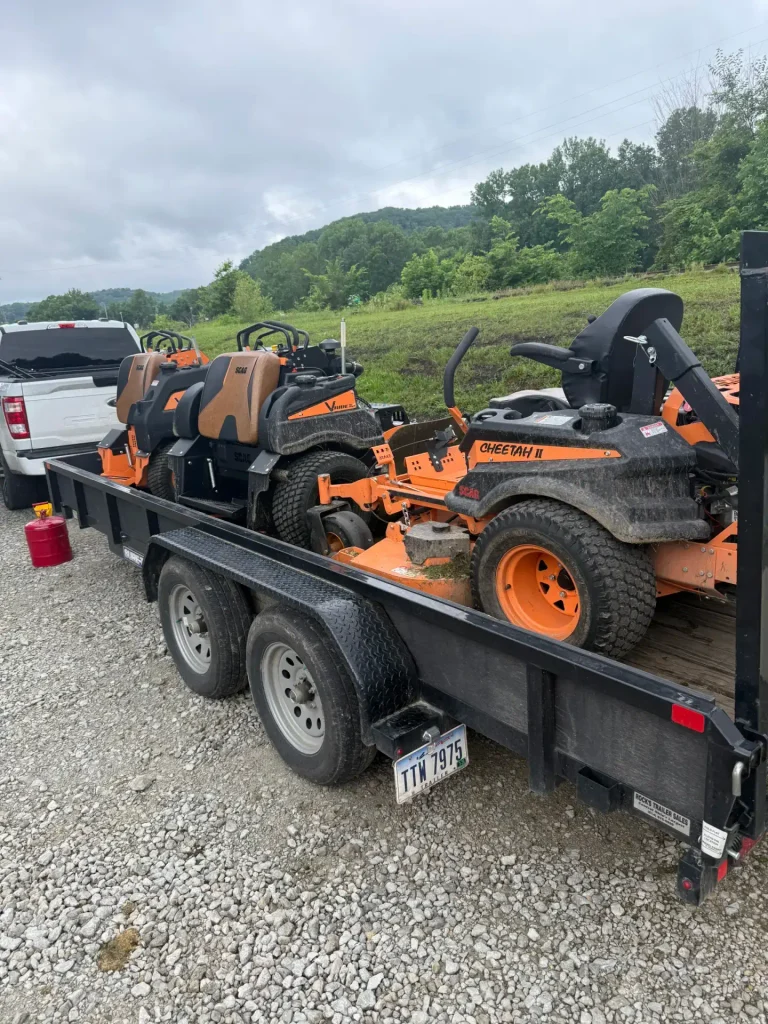
Leaf work is not a separate job from everything else we do in fall. It protects the aeration, seeding, and fertilization you already paid for.
Seedlings from a September overseeding are in their most fragile stage right now. They need four to six weeks of light, water, and air before the ground freezes. Leaves on top of them will quietly undo that investment.
Fertilizer behaves the same way. Nutrients have to reach soil and roots, and a leaf layer acts as a barrier between the two. Clearing leaves after an application is what lets the product do its job.
That is why we book cleanups alongside the rest of our lawn care work. Aerate, seed, feed, then keep the leaves off.
Why Lancaster Properties Take More Work Than You Expect
Lancaster has a serious tree canopy, especially in the older neighborhoods near downtown and along the Hocking River corridor. Mature oaks, maples, sweetgums, and sycamores drop more material than a rake and a stack of bags can keep up with.
Published estimates for a single mature oak run from about 200,000 leaves into the high hundreds of thousands. The sources disagree enough that we will not quote a hard number, but what is not in question is the volume. Most properties here have several large trees, and the pile of leaves grows every week through October.
We clear a residential lot with commercial blowers and mowers in a fraction of the time hand raking takes. On big lots and heavily shaded properties, the hours you get back are usually the deciding factor to outsource this service.
Frequently Asked Questions
When should fall leaf cleanup start in Lancaster, Ohio?
Late September or early October for the first pass. Waiting until every leaf has dropped leaves your grass covered through its best growing weeks.
How many cleanup visits does a typical property need?
Most properties need two to three visits between early October and mid-November. Properties with several mature trees usually need three.
Can I just mulch the leaves with my mower?
Yes, when the layer is light and your mower shreds it into the canopy without leaving clumps. Heavy drop needs removal.
Do leaves really cause lawn disease?
Wet leaf mats hold moisture against the crown of the grass through late fall and winter, which is the condition snow mold needs to develop.
Do you clear leaves out of beds and off patios too?
Yes. Beds, shrubs, walkways, driveways, patios, and gutter lines are all part of our cleanup.
What happens to the leaves after you collect them?
We either haul them off the property or bag and stage them for city yard waste collection on your scheduled pick-up day.
Get on the Fall Schedule
Fall leaf cleanup in Lancaster, Ohio, with weather being what it is, runs on a short calendar. You get roughly eight weeks from the first real drop to the first hard freeze. Book late and your lawn will spend part of that window buried.
Whether you want one visit or a multi-pass program, get in touch and we will get you on the schedule before the October rush.
One Response