
Fall Lawn Fertilization in Lancaster, Ohio: How We Feed Lawns Before Winter
By early September we are already booking fall lawn fertilization for Lancaster, Ohio yards, because this is the step that changes how a lawn looks next April. If you had your yard aerated and overseeded in August, feeding is the next step in the sequence. If you skipped both, a fall feeding still moves the needle.
Cool-season grasses run our yards here in Fairfield County: Kentucky bluegrass, perennial ryegrass, and fescues. From September into November they slow their top growth and put their energy into roots and stored reserves. Nutrients you give them in that window get banked instead of burned off.
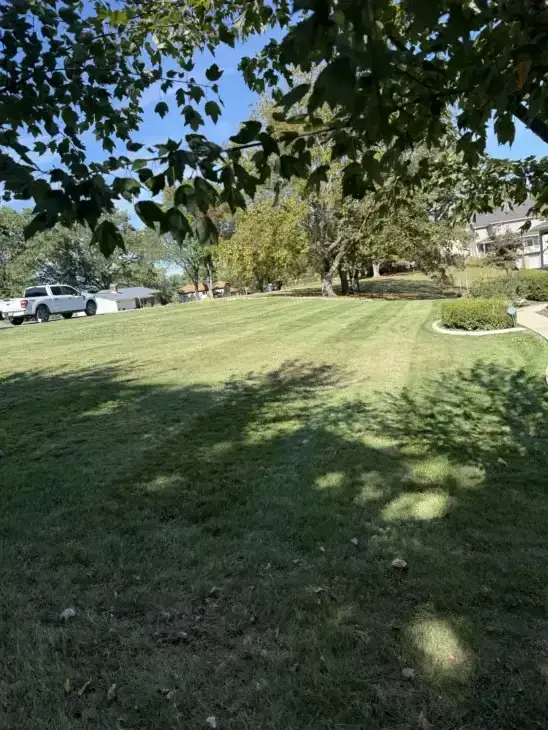
Why we push fall feeding harder than spring feeding
Ohio State turf research is direct about this. Lawns fed in September and again later in fall held better fall and winter color. They also showed signs of spring green-up two to six weeks earlier. That early green-up arrives without the surge of shoot growth that heavy early-spring nitrogen causes, which keeps April from turning into a mowing scramble (OSU Turfgrass Pathology).
What you see above ground in October is a lawn that has stopped stretching. Below ground the roots keep working, and they take up nitrogen as long as the grass holds color. Feed in that window and you get density, deeper roots, and reserves for winter. Skip it and your yard enters freeze-thaw season empty. You see that in March: slow patchy green-up and open ground for crabgrass.
There is one timing rule we always follow: the late round goes down while the grass is still green and growing, not after it has gone dormant. Dormant and winter applications are a different thing, and they do not deliver the same result.
Fall lawn fertilization, Lancaster Ohio: our two-round schedule
We work off soil temperature and grass color rather than a fixed date, so the calendar below shifts a week or two either way depending on the season.
| Round | When we apply | What the lawn is doing | Nitrogen rate | Product type |
|---|---|---|---|---|
| Round 1 | Early to mid September | Recovering from summer, growing again | About 1 lb N per 1,000 sq ft | Slow-release nitrogen, low phosphorus |
| Round 1 on new seed | Same window, seeded areas only | Seedlings rooting in | About 0.5 to 1 lb N per 1,000 sq ft | Starter blend with phosphorus |
| Round 2 (late season) | Around November in central Ohio | Top growth slowed, still green, roots active | About 1 lb N per 1,000 sq ft | Slow-release nitrogen plus potassium |
Two rounds is a common plan, not the only one. Total nitrogen for the year matters more than any single application. OSU puts the yearly range for bluegrass, ryegrass, and fescue lawns at about 3 to 4.5 pounds of actual nitrogen per 1,000 square feet (OSU Extension). If your lawn already had spring and early summer feedings, we scale the fall rounds to fit that total.
One caution from the same OSU research: cold injury and snow mold risk show up with heavy rates of quick-release nitrogen late in the season, above two pounds per 1,000 square feet. We stay well under that and lean on slow-release sources.
Reading the bag so you buy the right product
The three numbers on every bag are the percentages of nitrogen, phosphorus, and potassium by weight. A 50 pound bag of 24-0-11 is 24% nitrogen, so about 12 pounds of actual nitrogen, which covers roughly 12,000 square feet at a one pound rate.
Nitrogen drives color and growth. In fall we want it released over weeks, not dumped in a few days, so slow-release matters more than the headline number.
Phosphorus is the one people over-buy. For established Ohio lawns, OSU recommends minimal phosphorus, something like 18-0-10 or 22-2-14, unless a soil test shows a deficiency (OSU Extension). Phosphorus earns its place on freshly seeded ground, so that is where we use starter fertilizer.
Potassium supports cold tolerance and disease resistance, which is why the late-season round carries more of it.
Skip weed-and-feed products this fall if you overseeded in the last six to eight weeks. The herbicide in them does not care that your new grass is grass.
How feeding fits with aeration and overseeding
Order matters in the fall sequence. Core lawn aeration pulls plugs and opens channels through packed soil. Granular fertilizer then has a path to the root zone instead of sitting on a crust or running off in the next storm. Fairfield County has plenty of heavy clay yards where that difference is easy to see.
Overseeding puts new plants in those openings. The September round then feeds two things at once: the established turf and the seedlings that need to root before frost.

Missed aeration this year? Feeding on its own still banks reserves and still buys you an earlier green-up. You just get less of the nutrient delivery benefit.
Mistakes we get called out to fix
- Too much product. Over-application burns grass, forces top growth at the wrong time of year, and sends nutrients into local waterways. Measure the lawn, do the math on the bag, calibrate the spreader.
- Quick-release nitrogen in late fall. It pushes blade growth right when the plant should be storing energy.
- Granules on bone-dry soil. Water lightly first or time the application ahead of rain. Dry granules sit on the surface and can scorch blades.
- No soil test. Soil across the county runs from heavy clay with high pH to ground that drains nutrients fast. Your county OSU Extension office can run a lawn sample, usually in the $15 to $30 range. The report also tells you what to stop buying.
- Full-rate nitrogen over new seed. Young seedlings want a starter blend at a lighter rate. Keep herbicide off until the new grass has been mowed a few times.
Density now means fewer weeds later
Thick turf does more weed control than any product you can buy. Every bare patch you close this fall is ground crabgrass and broadleaf weeds cannot claim next spring. Fall feeding is how you close them.
This does not replace a spring pre-emergent program. Herbicide work belongs on its own schedule rather than mixed into a fall feeding. Fall feeding hands your lawn a head start, so the spring program has less to fight.
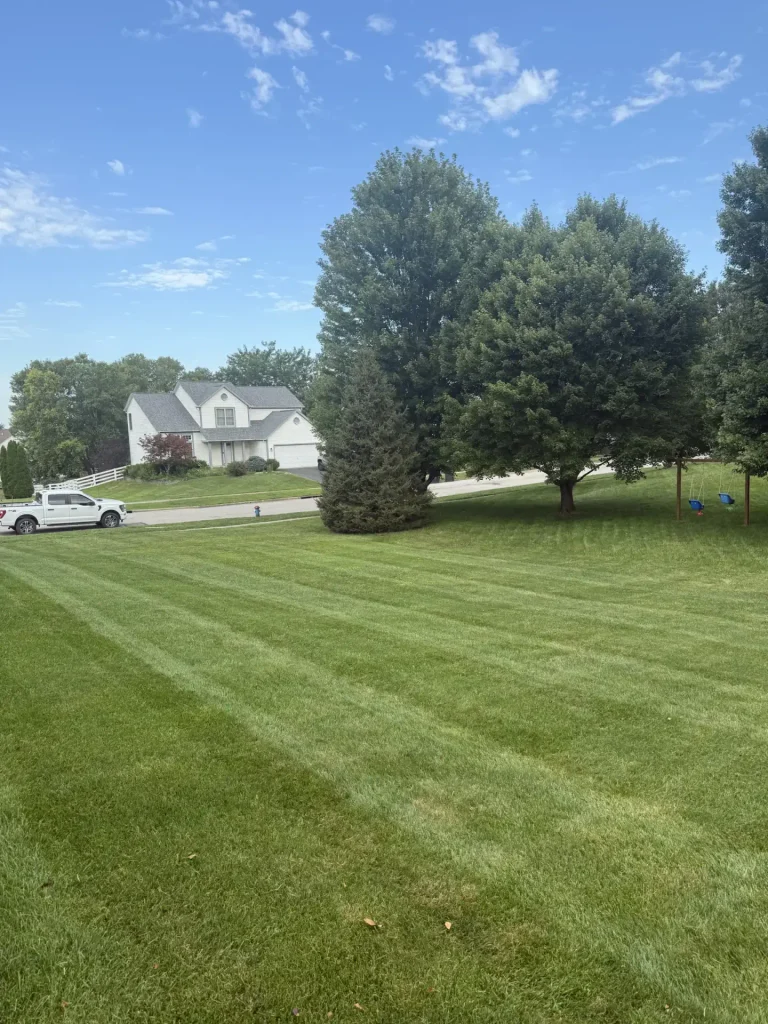
When it makes sense to hand it off
On a small flat yard with a decent broadcast spreader, feeding is a Saturday job. It gets harder with acreage, slopes, mixed grass types, shade, and sections that need different rates.
We calibrate to a target rate per 1,000 square feet and adjust for soil tests and what the lawn already received this year. The late round gets timed to grass color rather than a date on the wall. On commercial properties we keep the schedule documented for property managers who need it for budgets or compliance.
Fall lawn fertilization is part of our lawn care program for residential and commercial properties across Lancaster and Fairfield County, alongside aeration and overseeding. Want thicker turf and better curb appeal next spring? Get in touch or call us at (740) 601-3434 to schedule your fall rounds before the window closes.
Frequently Asked Questions
When should I fertilize my lawn in the fall in Lancaster, Ohio?
Plan on an early-to-mid September round and a late-season round around November for central Ohio. The late round needs to go down while the grass is still green and actively growing, not after it goes dormant.
How much nitrogen does my lawn need in the fall?
About one pound of actual nitrogen per 1,000 square feet per round is a common target. OSU puts total yearly nitrogen for bluegrass, ryegrass, and fescue lawns at roughly 3 to 4.5 pounds per 1,000 square feet. Fall rounds should fit inside that total rather than sit on top of it.
Is fall fertilizer better than spring fertilizer?
For cool-season lawns, fall feeding does more. OSU research found fall-fed turf greened up two to six weeks earlier in spring, without the excess shoot growth heavy early-spring nitrogen causes.
What fertilizer numbers should I look for?
or established Ohio lawns, use a low-phosphorus product with slow-release nitrogen, in the range of 18-0-10 or 22-2-14, unless a soil test says otherwise. Starter blends with phosphorus belong on newly seeded areas only.
Can I fertilize right after overseeding?
Yes, with a starter fertilizer on the seeded areas. Keep weed-and-feed and other herbicides off new grass until it has been mowed several times.
Do I need a soil test first?
It helps, and it usually pays for itself by telling you which nutrients to stop buying. Your county OSU Extension office can process a lawn sample, generally in the $15 to $30 range depending on the office and lab.
3 Responses