
If you manage a commercial property in Fairfield County, late summer is when the lawn tells the truth. Eight weeks of heat, drought stress, and heavy foot and mower traffic have already happened, and whatever is thin, compacted, or weed-filled right now is visible to every tenant, customer, and prospective lease signer walking your entrance.
Commercial lawn care in Lancaster, Ohio has a narrow, high-leverage window between mid-August and late October, and what gets done in it largely determines how the property looks next May.
This is the part of the calendar most commercial properties miss. Mowing continues, the invoices keep coming, and nothing actually improves because mowing maintains turf, it doesn’t repair it. Repair work is seasonal, and the season is now.

Why Fall Is the Real Growing Season for Ohio Turf
Central Ohio lawns are dominated by cool-season grasses, including Kentucky bluegrass, turf-type tall fescue, and perennial ryegrass. These grasses have two growth peaks, spring and fall, and they go semi-dormant through the hottest stretch of summer. That biology drives the whole commercial lawn care calendar.
In late summer and early fall, soil is still warm enough for fast seed germination while air temperatures are dropping and rainfall typically becomes more reliable. Weed pressure is also falling off, so new grass isn’t competing with crabgrass for light and water.
Spring looks like the obvious time to fix a lawn, but spring seeding puts fragile new grass directly into summer heat with pre-emergent restrictions complicating weed control. Fall-established turf goes into winter with real roots and comes back in spring ahead of the weeds.
For a commercial property, that translates simply: money spent on turf recovery in September does more visible work than the same money spent in April.
What Commercial Lawn Care Should Include This Time of Year
Ongoing mowing and trimming is table stakes. The work that actually changes the property’s appearance in this window is different:
Core Aeration
Commercial properties compact far worse than residential lawns. Mower traffic follows the same lines weekly, and pedestrians cut the same corners across the same turf every day.
Compacted soil blocks water, air, and root growth. Core aeration pulls plugs from the soil and relieves that compaction.
Overseeding
Aeration and overseeding belong together. The holes created during aeration give seed direct soil contact instead of leaving it sitting on thatch.
This is how thin, worn areas along walkways, entrances, and parking islands get filled in.
Fall Fertilization
Fall feeding drives root development rather than just top growth. Stronger roots help carry turf through winter and encourage earlier green-up in spring.
Broadleaf Weed Control
Perennial weeds like dandelion and clover are moving energy down into their roots in fall, making properly timed systemic weed control especially valuable.
Leaf Management
Leaves left matted on turf block light and hold moisture against the crown. On commercial sites, the appearance issue often arrives before the agronomic one. A leaf-covered entrance reads as neglected long before the grass suffers.
Bed and Edge Cleanup
Crisp bed edges and properly maintained plantings make the difference between a property that looks professionally maintained and one that looks merely mowed.
Sequence matters. Aeration before seeding, seeding before the fertilizer that supports establishment, and weed control timed so it doesn’t interfere with new seedlings. A provider running these as disconnected one-off services gets weaker results than one running them as a planned sequence.

Alt text: Professionally maintained commercial landscaping in Lancaster Ohio
The Difference Between Commercial and Residential Lawn Care
The services share names, but the execution is genuinely different. This is where under-scoped commercial contracts often go wrong.
Scale and Equipment
A multi-acre office park or retail center is a route, not a stop. It needs equipment sized for open turf and separate equipment for islands, medians, and tight strips between parking rows.
Traffic and Wear Patterns
Commercial turf takes concentrated, repetitive abuse in predictable places. This includes pedestrian shortcuts between parking rows and entrances, dog-walk areas at apartment communities, delivery traffic, and snow-pile locations that damaged turf the previous winter.
Scheduling Around Operations
Nobody wants a mower running outside a conference room window at 10 a.m., at a medical office during peak patient hours, or next to a restaurant patio during lunch.
Commercial scheduling should work around building operations, not simply around the lawn company’s route.
Presentation Standards
On a residential lawn, healthy turf may be the primary goal. On a commercial property, the goal is a first impression that supports leasing, retail traffic, tenant satisfaction, and the overall appearance of the business.
Edges, clean-blown hard surfaces, healthy turf, and consistency across the entire site matter.
Documentation and Accountability
Property managers usually answer to an owner, board, or tenant. Service records, clear scopes of work, and a single point of contact make that reporting considerably easier.
What This Should Look Like on Your Property Right Now
A useful late-summer walkthrough of a commercial property should be concrete. Look for:
- Thin or bare turf along walkways and entrances
This commonly points to compaction and traffic wear. Aeration and overseeding can help rebuild these areas. - Grass that browned in July and hasn’t recovered
It could be drought stress, or there may be a deeper irrigation or soil issue worth diagnosing before repeating the same treatment. - Weeds outcompeting grass in patches
Controlling the weeds is only half the job. Those areas may also need seed so the newly opened space doesn’t simply fill with weeds again. - Ruts or scalped high spots
These can indicate mowing-pattern or grading problems rather than fertility issues. - Overgrown or shapeless landscape beds
Cleaning these areas up is one of the fastest ways to improve a commercial property’s overall appearance. - Dead patches where snow was piled last winter
Note those areas now and consider changing where snow gets stacked this coming winter.
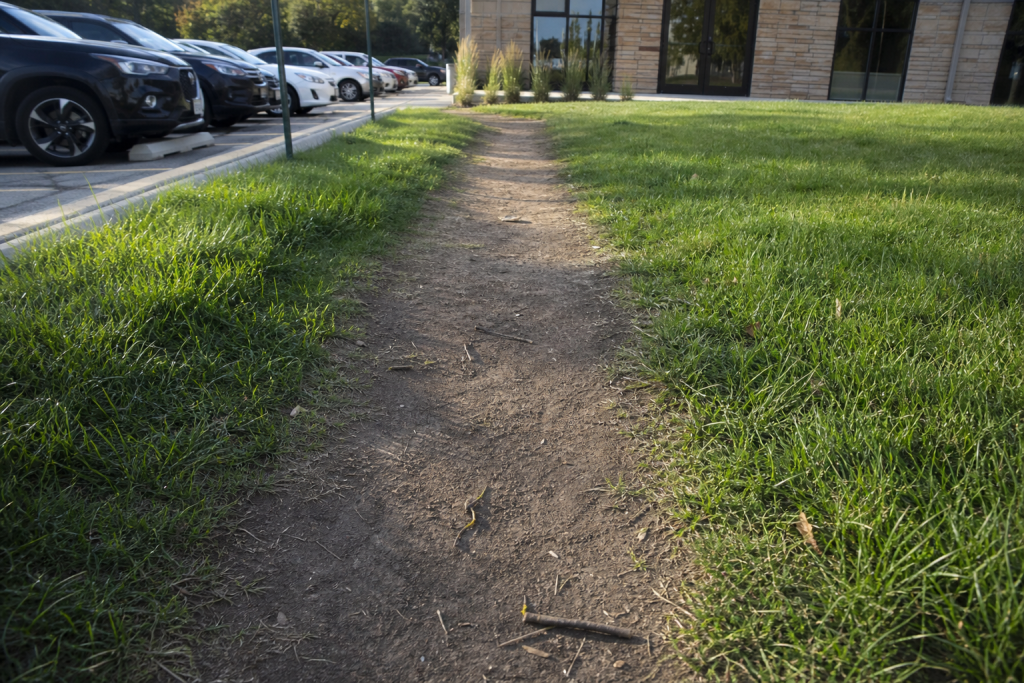
Alt text: Worn commercial lawn from heavy foot traffic and soil compaction
If you can walk your property and identify three of those problems, you already have the beginnings of a fall scope of work rather than a guess.
Budget Timing: Fall Work Sits in Two Fiscal Years
There’s a practical reason to sort this out in August rather than October.
Fall turf recovery is usually funded from the current year’s maintenance budget, while next year’s landscape maintenance contract often gets set during the same fall planning cycle.
Getting a scope and price in hand now means you can fund recovery work this year and go into next year’s budget conversation with a maintenance number that already accounts for the property’s actual condition, rather than simply copying last year’s line item.
It also means the property gets its aeration and seeding inside the proper window instead of waiting until November when there may not be enough growing time for strong establishment before winter.
Getting Ahead of Next Spring
The properties that look sharp in May are not necessarily the ones that started working on their turf in April.
They are the properties that got aerated, seeded, and fed while the soil was still warm in the fall and then followed a consistent maintenance program instead of reacting to problems after tenants or customers noticed them.
If you manage commercial property in Lancaster and the turf is not where you want it, the useful next step is a walkthrough while the damage is still visible and the repair window is still open.
Get a Commercial Lawn Care Plan for Your Property
Ready for a plan instead of another mowing invoice?
Contact All Season Lawn Pro for a commercial property walkthrough and written fall scope of work. We’ll help you identify what needs attention, establish clear pricing, and create a schedule that works around your property’s operations.
Get the recovery work done this fall so your turf is ready to show up green next spring.